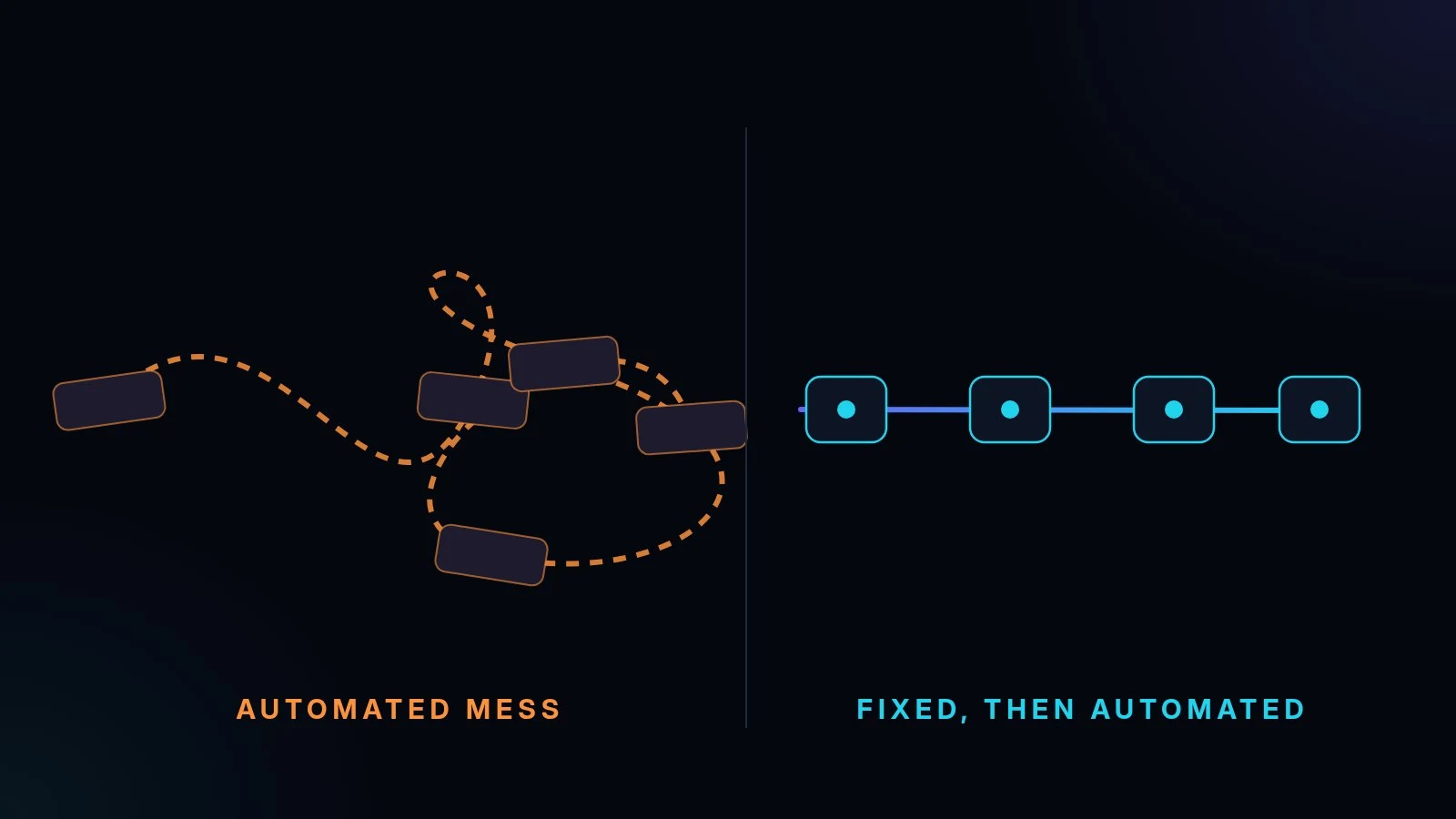
Most small business owners we speak to aren't short of AI tools. They're short of a starting point. Every week there's a new app, a new feature, a new promise, and the question quietly shifts from "what would help us?" to "which tool should we buy?". That's the wrong question to start with.
This piece is about the right one: where, in your business, should AI go first?
The real problem is the starting point, not the tools
The tools have become affordable, and the free tiers of the main AI assistants are good enough to learn on. The learning curve for everyday tasks is short. What's usually missing is a short list of things worth doing first, and the discipline to do two of them properly instead of ten of them halfway.
When a business starts with tools, it tends to collect logins. When it starts with its own work, it tends to collect hours.
Start with time, not technology
Before you open any AI tool, take ten minutes and write down the three tasks that eat the most hours in your week. Then ask your team to do the same.
Be specific. "Admin" is too vague to fix. "Typing up enquiries from WhatsApp into the spreadsheet" is something you can actually change. Good candidates usually share three traits:
- They happen every week, often every day.
- They follow a pattern: similar inputs, similar outputs.
- Someone finds them tedious, which usually means they're done in a hurry and mistakes creep in.
Writing, summarising, sorting and first drafts are where general AI assistants are strongest today. If your list includes routine emails, meeting notes, long documents nobody has time to read or quotes written from scratch, you've found your first targets.
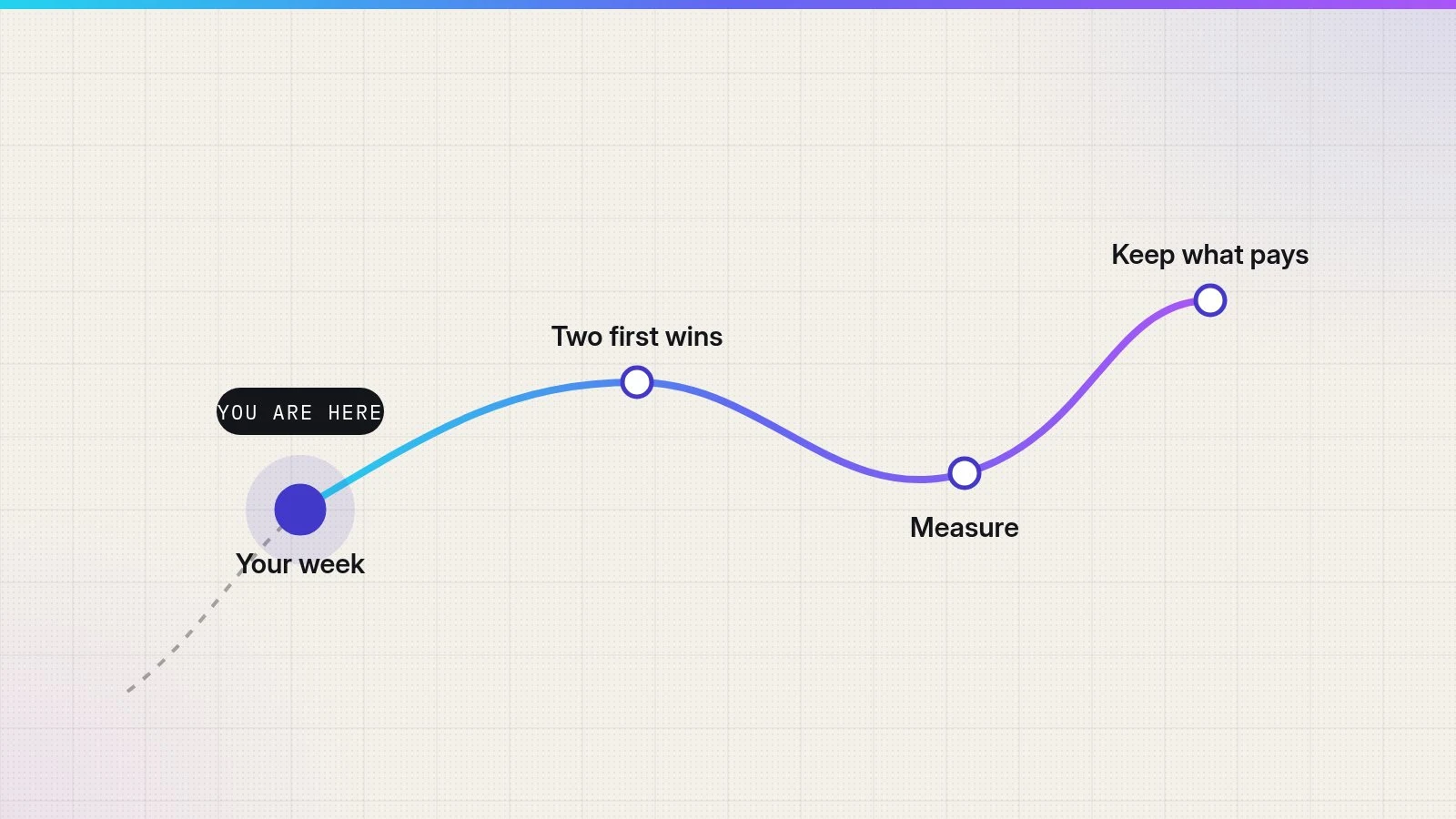
Pick two first wins: one for you, one for your team
Don't roll AI out to everyone on Monday. Pick two wins:
- One for you. Something in your own week, so you learn what the tools do well and where they fall short. Drafting replies to routine emails is a good first choice: paste the email in, say what you want the reply to achieve, then edit it into your own voice before sending.
- One for your team. Something shared and visible, such as turning meeting transcripts into a list of decisions, action items and owners. Tell attendees the meeting is being transcribed; it's courteous, and in many situations it's required.
Block 60 to 90 minutes this week to set both up properly. Save the instructions that work as reusable templates so the next person doesn't start from a blank page.
The goal of your first month isn't to "do AI". It's to win back a few hours in a way you can repeat.
Keep client data safe from day one
South African businesses handle personal information under POPIA, the Protection of Personal Information Act, so safety isn't something to add later. Set a few simple rules before anyone pastes anything into an AI tool:
- Never paste ID numbers, banking details, medical information, passwords or unreleased financials into a public AI tool.
- Anonymise first. "Client A" and "Product X" work just as well for drafting and summarising.
- Use business accounts where you can, and check each tool's data settings, including whether your inputs are used for training.
- Write it down. A one-page usage policy beats a rule that lives in one person's head.
This isn't legal advice. If you handle sensitive personal information at scale, speak to someone qualified about your obligations.
Measure for one week, then decide
Before you start, note roughly how long each of your two tasks takes today. After a week of using AI for them, check again.
Keep what clearly pays back. Drop what doesn't, without guilt. Some tasks look perfect for AI on paper and turn out to need so much checking that they save nothing. That's useful to learn early and cheaply.
Then pick the next two. Small, measured steps add up faster than one big rollout that stalls in the second month.
When you're past the quick wins
After a few rounds of quick wins, the questions change. Who owns AI in the business? Which tools are approved? Is your information organised enough for AI to use? Which processes are clear enough to improve?
That's when it helps to look at your readiness as a whole rather than task by task. We look at it across six areas: strategy and leadership, data and information, processes and operations, people and skills, technology and tools, and governance and risk. A new tool usually helps with one of them. Most stalls happen in the other five.
Your starting checklist
- List the three tasks that take the most hours in your week.
- Ask your team for their three.
- Choose one win for you and one for your team.
- Agree what never goes into an AI tool, and write it down.
- Note how long each task takes today.
- Set up both wins this week and save the prompts that work.
- Review after seven days: keep, adjust or drop.
- Pick the next two.
Where to go from here
If you want a ready-made list of first wins, our free guide, 10 AI Quick Wins for Your Business, sets out ten of them with step-by-step instructions. It's in the Products section of our website.
When you're ready to look at the bigger picture, the AI Readiness Diagnostic walks you through 30 statements across those six areas and gives you an action plan for your score.
And if you'd rather talk it through, get in touch. We're happy to help you find your starting point.